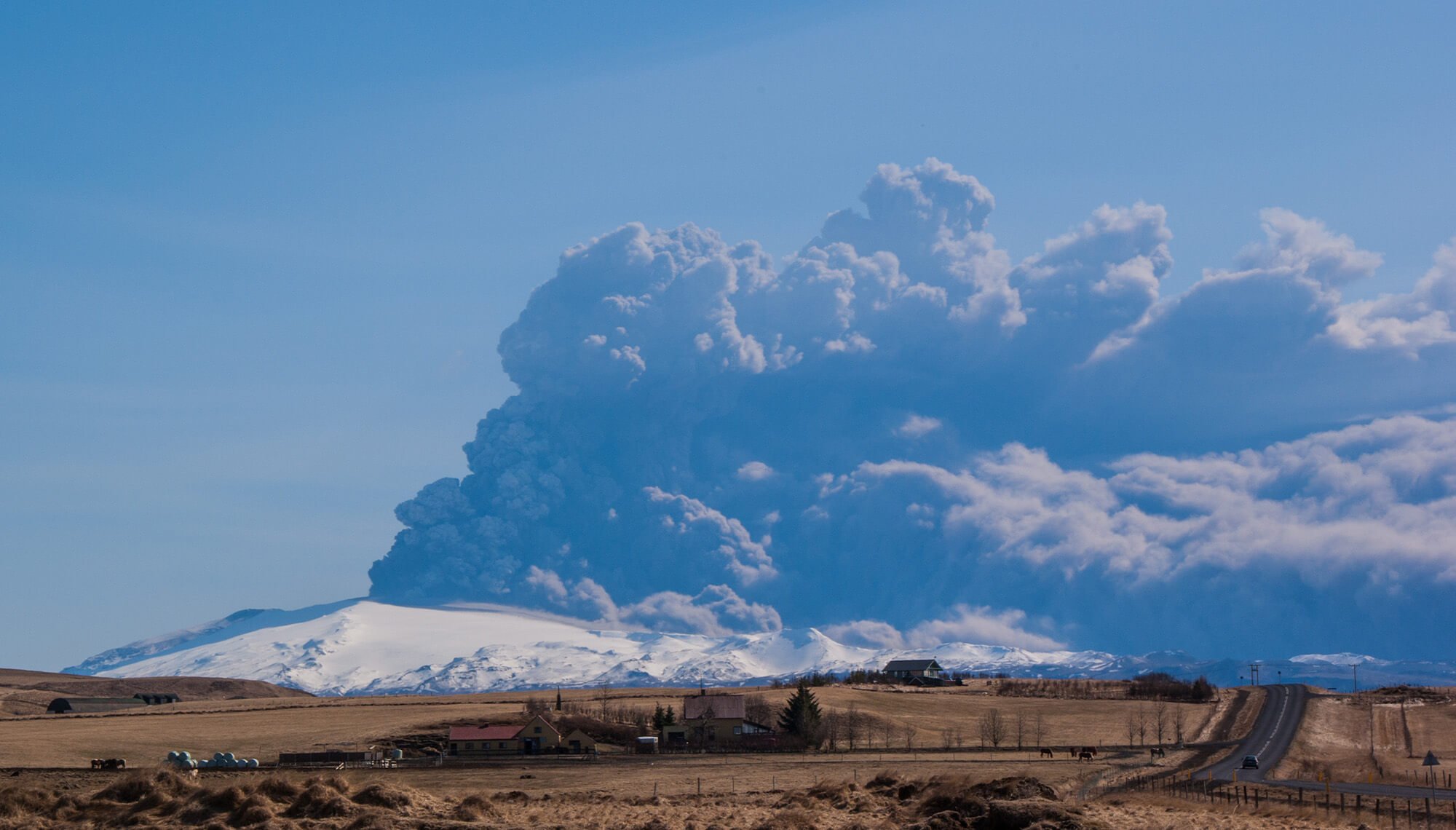
Measuring the impact of airborne particles on jet engine performance and safety.

The eruption of the Iceland volcano Eyjafjallajökull in 2010 points out the vulnerability of jet engines to high altitude jagged volcanic ash and other airborne particles.
Intertek laboratories work with jet aviation, jet engine and other industry clients to monitor for potential damage to jet engines and aviation systems from collisions with airborne particles like volcano dust. The data can help determine if the jet engines were exposed to volcanic ash, suffer from engine wear, and other issues.
Intertek checks for particles (particle count testing) and element testing, mainly to investigate for the presence of silicon. Silica (silicon dioxide) particles formed under high heat, as in an explosive volcano, can form glass splinters, which can block jet engine systems.
The jet engine laboratories test for the presence of wear metal elements; silver (Ag), aluminium (Al), chromium (Cr), copper (Cu), iron (Fe), magnesium (Mg), silicon (Si) and titanium (Ti). To determine if contamination with volcanic ash is present, other elements should be analysed as well. To test for the presence of volcanic ash, additional elements are tested, including calcium (Ca), potassium (K), phosphorous (P) and sulfur (S).
As volcanic magma contains a large variety of heavy metals, every extra element detected and tested for provides valuable information.